
Tippecanoe County Criminal Court Records
A criminal court record begins when the State's charges are filed with the court and the case is opened in the Clerk and Odyssey systems. It can include the charging information, probable-cause material where public, appearances, counsel appointments, bond orders, warrants where public, hearing notices, motions, pleas, trial settings, disposition entries, sentencing entries, probation terms, restitution, fines, fees, and post-conviction filings.
The filed charge is only one part of the criminal court record. A closer look at the charge itself belongs on the Tippecanoe County arrest records and court charges page, while broad civil, family, probate, traffic, and criminal search coverage belongs with all Tippecanoe County court records. Criminal case files focus on how the case moved through court and how it ended.
Where Tippecanoe Criminal Cases Are Filed
Tippecanoe County uses Circuit Court and Superior Courts for local state criminal cases. Major criminal cases can route to Circuit Court, Superior Court 1, or Superior Court 2. Local rules assign murder and Level 1 through Level 4 felonies among those courts in a stated ratio. Superior Court 5 and Superior Court 7 cover many lower-level criminal matters, and Superior Court 6 handles traffic and motor-vehicle crimes such as OWI, leaving the scene, reckless driving, habitual traffic violations, and certain operating-while-suspended matters.
| Court | Criminal Record Role |
|---|---|
| Circuit Court | Major criminal cases and other general-jurisdiction criminal matters. |
| Superior Court 1 | General civil and criminal docket, with Forensic Diversion Court noted in research. |
| Superior Court 2 | Major criminal matters, magistrate functions, bail, and expungement-related work. |
| Superior Court 5 | Many misdemeanor and Level 6 felony assignments under local-rule notes. |
| Superior Court 6 | OWI, traffic infractions, and motor-vehicle criminal cases. |
| Superior Court 7 | Hybrid misdemeanor, Level 6 felony, and some warrant or 72-hour hold filings. |
Superior Court 5 appears in the criminal-record manifest. The Superior Court 5 page is a local source for Tippecanoe County criminal court records assigned to that court.
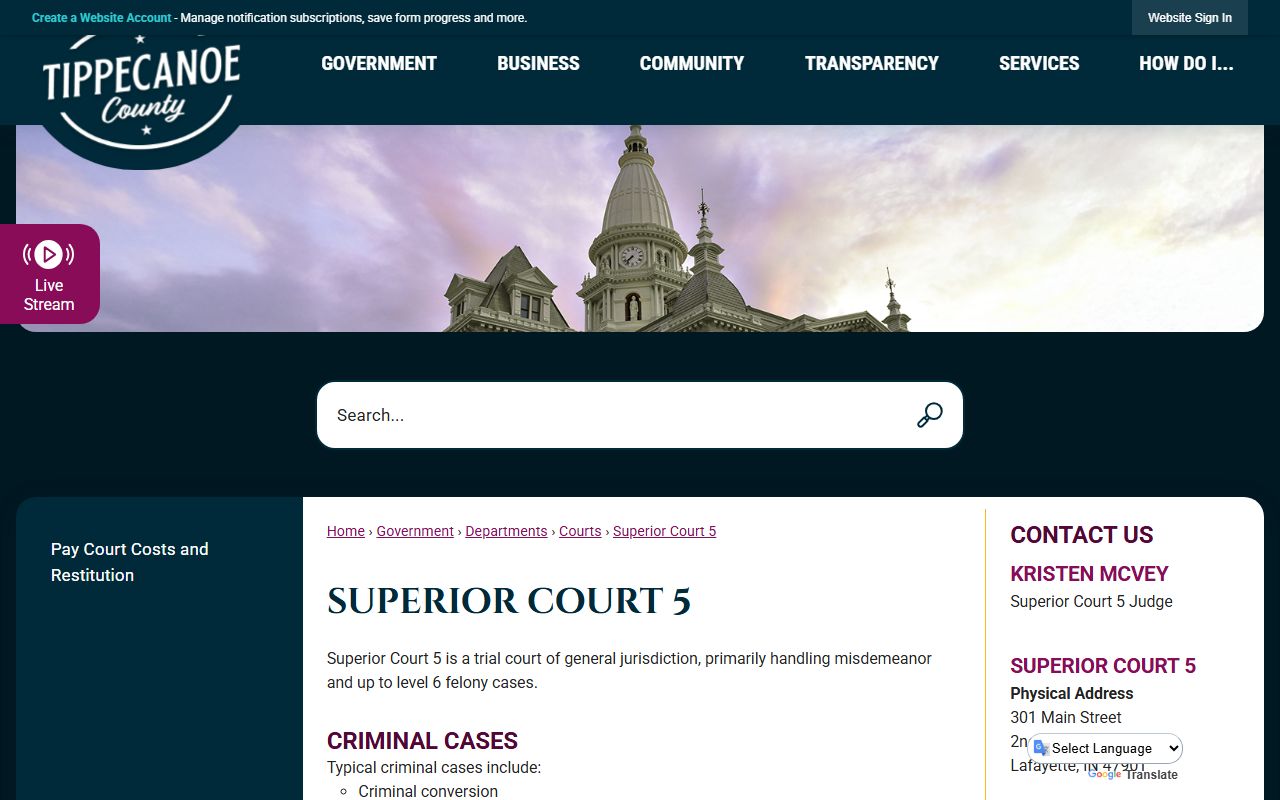
That court page supports the local assignment discussion because a criminal record search is easier when the assigned court is understood.
Search Tippecanoe Criminal Court Records
Public criminal case information is searched through Indiana MyCase. The Tippecanoe County records pages link to the same statewide Odyssey system and state that users can search by case, name, or attorney. For criminal matters, the Criminal and Citation category is the most useful category filter. A case number is the cleanest route. A defendant-name search works when the number is not known, but name matches can include civil, traffic, family, and older matters unless filters are used.
- Open MyCase and choose By Case or By Party for most criminal searches.
- Select Tippecanoe County, or include West Lafayette City Court when a city-court citation may be involved.
- Use case number, defendant name, citation number, or cross-reference number, but do not combine the number fields.
- Filter by Criminal and Citation, filing-date range, and open or closed status if the result list is broad.
- Open the case summary to read charges, bond, events, hearings, pleas, dispositions, sentencing, and public documents.
- Use the Tippecanoe County Clerk's SBS request system when a certified copy or non-downloadable filing is needed.
Statewide criminal-history or custody tools are not substitutes for the court case file. The Indiana Department of Correction locator applies to sentenced state prisoners, and SAVIN or VINELink can help with custody and notification information. The court record remains the source for filed charges, docket entries, pleas, disposition, and sentence in the Tippecanoe court case.
Tippecanoe Criminal Case Stages
Criminal court records change as a case moves through the system. Early entries may show the filed charge, initial hearing or arraignment, bond, appointed counsel, and the next court date. Later entries can show motions, continuances, plea agreements, trial settings, verdict, disposition, sentence, probation, restitution, court costs, or post-conviction filings. The record should be read from the earliest filing through the most recent docket entry.
Case flow: Charges Filed › Initial Hearing or Arraignment › Pretrial and Motions › Plea or Trial › Disposition › Sentencing
| Stage | What Happens |
|---|---|
| Charges Filed | The prosecutor files the alleged offenses, and the Clerk opens the court case. |
| Initial Hearing / Arraignment | The defendant is advised of the charge, rights, bond, and future court dates. |
| Pretrial / Motions | Attorneys file requests, discovery issues are handled, and hearings may be set. |
| Plea or Trial | The case resolves by plea, bench trial, jury trial, dismissal, or other court action. |
| Disposition | The record shows the outcome of each charge or the case as a whole. |
| Sentencing | The court enters jail, prison, probation, fines, restitution, costs, or other terms after conviction. |
Superior Court 7 is a key local source for hybrid criminal work. The Superior Court 7 page describes its misdemeanor, Level 6 felony, and related docket role for Tippecanoe County criminal court records.
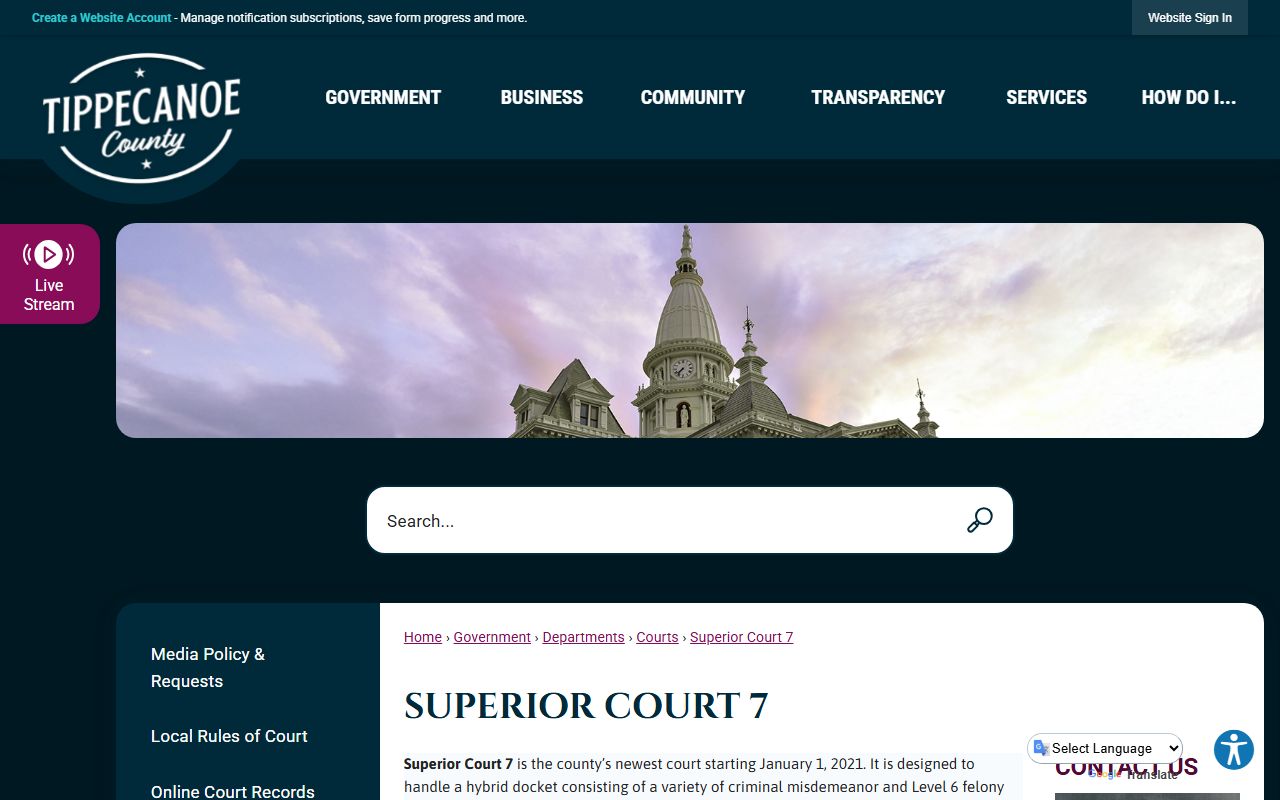
The source is useful when a criminal case search returns a Superior Court 7 assignment or a docket entry tied to that court.
What Tippecanoe Criminal Records Show
The public MyCase model can expose many criminal-record fields. Not every field appears in every case, and protected details can be masked. Still, a criminal court record can show enough to follow the case from filing to disposition, especially when the user checks charges, bond, hearings, event history, sentencing, judgment, and financial sections together.
| Field | What It Shows |
|---|---|
| Case Number | The Indiana cause number for the criminal court case. |
| Defendant | The person charged, with public party details and attorney connections where allowed. |
| Charges | Charge description, count, citation number, offense date, statute, degree, and modifications. |
| Bond | Bond number, amount, status date, and release-related details where public. |
| Hearings | Hearing type, date, time, court, judicial officer, and courtroom where included. |
| Plea | The defendant's formal response to a charge when entered in the record. |
| Disposition | The outcome, such as guilty, not guilty, dismissed, acquitted, or other case resolution. |
| Sentence | Jail, prison, probation, fines, costs, restitution, treatment, or other ordered terms. |
| Redactions | Masked victim, witness, juvenile, identifier, or excluded-record data under access rules. |
Charges vs Convictions
A filed charge is an accusation in court. A conviction is a later finding or plea of guilt. Tippecanoe County criminal court records may show charges that were amended, reduced, dismissed, or resolved by acquittal. This distinction matters because a search result can list several counts even though only some resulted in conviction, sentence, or probation.
| Charge | Conviction | |
|---|---|---|
| Stage | Filed after prosecutor review | Entered after guilty plea, finding, or verdict |
| Meaning | An alleged offense, not proof of guilt | A court outcome finding guilt on a count |
| Record Location | Charge list, docket, charging document, and case events | Disposition, judgment, sentence, and financial entries |
| Can Change | Can be amended, reduced, dismissed, or dropped | Can lead to sentence, appeal, expungement filing, or post-conviction action |
Read Dispositions and Sentences
The disposition is the outcome of a charge or case. In a criminal record, each count should be read separately because one case can contain multiple charges with different outcomes. A sentence appears only after a conviction or other sentencing event. It may include incarceration, probation, community supervision, treatment conditions, restitution, fines, fees, court costs, no-contact orders, or license-related consequences in motor-vehicle matters.
Financial entries should be read with caution. Public summaries can show fees, fines, restitution, transactions, or court costs, but a full accounting may require Clerk assistance. When a sentence involves custody, the court record and jail or DOC custody record are separate systems. The court record explains the sentence; custody tools explain current detention, release, transfer, or notification status.
Note: Review every count separately because one criminal case may include both dismissed charges and conviction entries.
Sealed vs Expunged Records
Indiana Code 35-38-9 governs expungement and sealing of eligible arrests, charges, and convictions. Tippecanoe local rules add specific filing assignments. Non-conviction petitions are generally filed in the court where charges were filed under a new XP cause without court costs. If no charges were filed, or if the petition covers multiple courts, the filing goes to Superior Court 2. Conviction expungements usually go to the court of conviction, while juvenile delinquency and CHINS expungement petitions generally go to Superior Court 3.
| Sealed | Expunged | |
|---|---|---|
| Public View | Restricted from ordinary public access | Hidden, marked, or limited under Indiana expungement rules |
| Where Filed | By court order or access rule | Usually under IC 35-38-9 and local XP filing assignments |
| Effect | Limits public view of the court record or selected fields | Restricts eligible arrests, charges, or convictions but may not erase every outside reference |
| Access | May require Rule 9 procedure or court order | May remain available to limited authorized users depending on law and order |
Access to Tippecanoe Criminal Records
Indiana Rule 4 states that court records are publicly accessible unless excluded by Rule 5 or other authority. Rule 5 excludes records and fields such as mental-health cases, sealed cases, investigatory warrant matters, Social Security numbers, account numbers, protected victim and witness information, and some warrant-related material before arrest. Rule 9 provides a procedure for requesting excluded court records when the law permits access through waiver, court finding, verified request, or order.
The Indiana Judicial Branch posted official January 2026 statements related to Tippecanoe court security and judicial assignments. The Indiana Judicial Branch Tippecanoe court statements are relevant here only as official court-system context, including special judge and coverage orders that can affect docket and case administration.
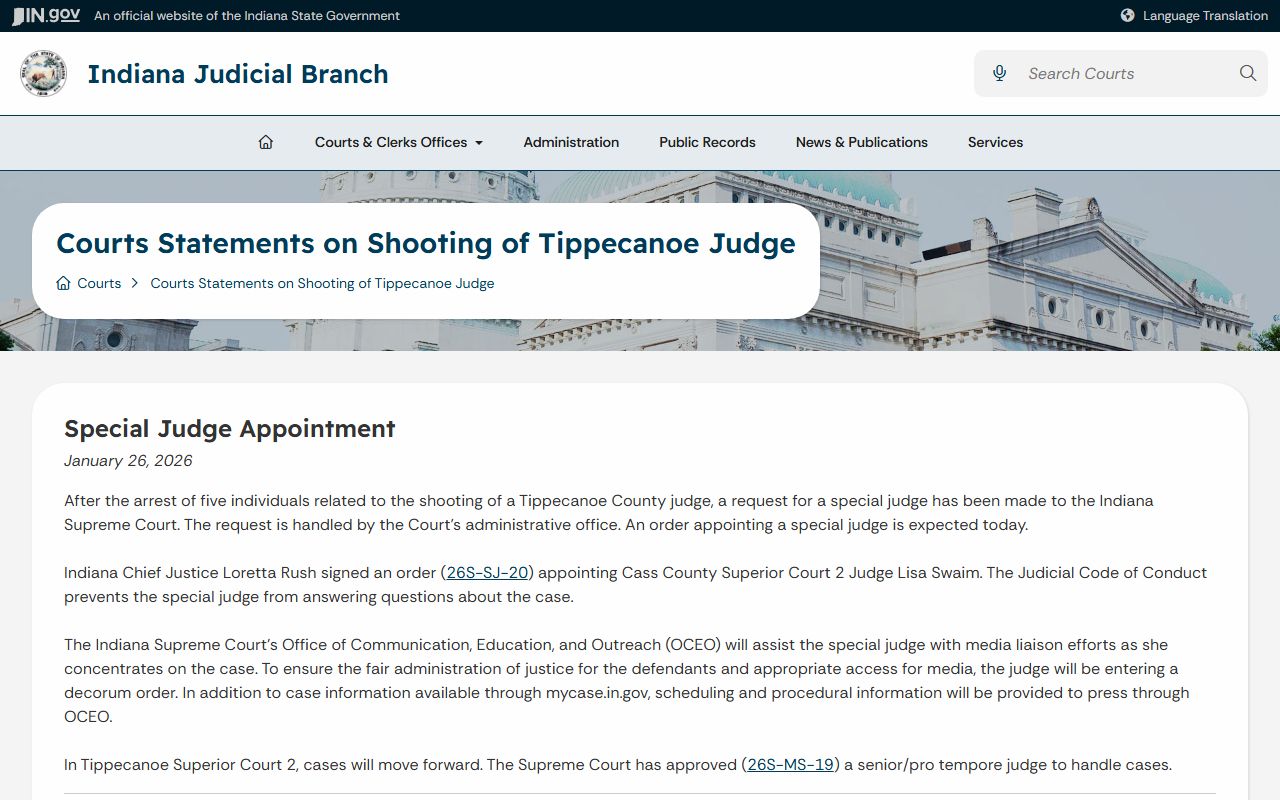
The image connects criminal court record review to official court administration sources rather than unofficial news or outside summaries.
The Indiana Supreme Court also publishes judge appointment orders. The Indiana Supreme Court public judge orders can help explain why a Tippecanoe criminal court record names a special judge, senior judge, or pro tempore judge.
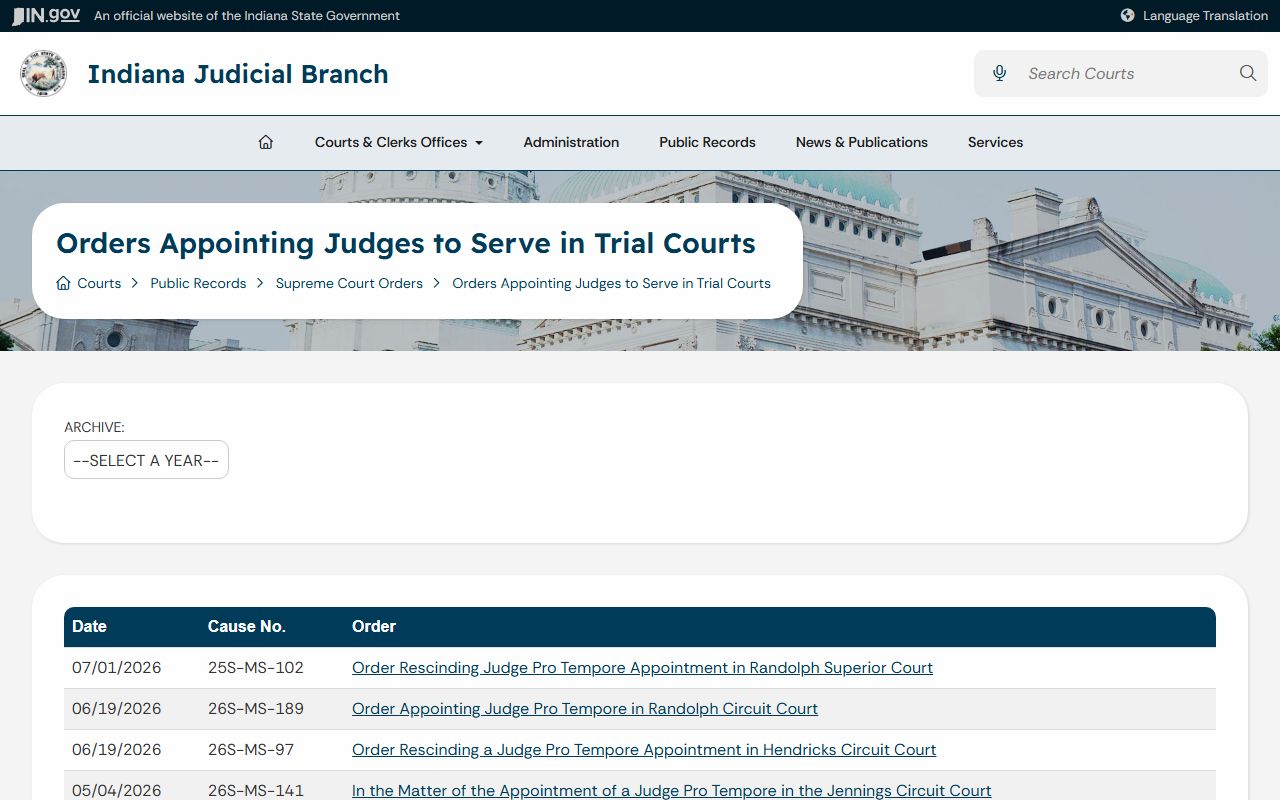
Those orders are part of the official record environment when judge assignments or administrative entries appear in a case docket.
Prosecutor and Defense Roles
Indiana counties use a Prosecutor, not a district attorney title. The Tippecanoe County Prosecutor files criminal charges on behalf of the State. The Prosecutor's Office is at 111 N. 4th Street, 2nd Floor, Lafayette, IN 47901, with phone 765-423-9305 and email prosecutor@tippecanoe.in.gov. Official prosecutor news can give dated examples of case outcomes, but it should not replace the court record for a specific case.
The Tippecanoe County Public Defender's Office represents indigent clients appointed by the courts. The office handles adult and juvenile criminal charges, juvenile status offenses, probation violations, and other appointed cases. It is not a records office. A criminal court record may show appointed counsel, attorney entries, or defense appearances, but record copies still route through MyCase and the Clerk.
Restricted Tippecanoe Criminal Records
Restricted criminal court records include juvenile matters, sealed cases, expunged records, protected victim and witness information, some warrant-related records before arrest, mental-health-related records, and records with protected identifiers. Superior Court 3 handles nearly all juvenile matters, and juvenile access can depend on statutory authorization, court discretion, or a court order.
Background checks are a separate issue. A public case lookup is not the same as a legally compliant consumer report, employment screen, tenant screen, insurance screen, or credit report. Criminal court records should be verified with the originating court or Clerk before they are used for any serious decision, especially when charges were dismissed, reduced, expunged, or sealed.
Important: Public criminal case lookup is not an FCRA-regulated background check and should not be used as one.