
Tippecanoe County Probate Court
Probate in Tippecanoe County is not handled by a separate probate court. The Tippecanoe Circuit Court has exclusive jurisdiction over probate matters, including estates, guardianships, adoptions, and trusts. That local structure matters because a probate search may show the court as Circuit Court even when the filing is an estate or guardianship case. The court is part of the same courthouse system that also routes filings through the Tippecanoe County Clerk for copies, certified records, and many counter requests.
For records access, the path is split by task. Case lookup starts in Indiana MyCase when the probate case is public and indexed. Copy requests usually go through the Clerk's SBS request portal or the Clerk counter. Case questions about scheduling, motion hour, or Circuit Court procedure may go to Circuit Court staff. Copy questions, certification questions, and older file questions should normally start with the Tippecanoe County Clerk.
Tippecanoe Circuit Court
301 Main Street
Lafayette, IN 47901
765-423-9343
Fax: 765-423-9116
Monday-Friday, 8:00 AM-4:30 PM; closed noon-1:00 PM
Search Tippecanoe County Probate Records
MyCase supports a Probate category filter, shown as PR Probate, and a Tippecanoe County court option. A person can search by case number, party name, business name, or attorney. Party searching can help with an estate name, decedent name, petitioner, personal representative, guardian, or attorney, but a public search may not show every document. Downloadable files appear only when the public record exposes a document link.
- Open MyCase and choose the party, case, or attorney search mode.
- Select Tippecanoe County in the court field. Use statewide results only if the county filter is too narrow.
- Use the PR Probate category filter when the search screen offers category choices.
- Open the case summary and review court, case type, file date, status, parties, events, and available documents.
- If a document is not downloadable or the case is older, submit a Clerk record request for copies.
Older records, certified copies, and filings that are not downloadable should be requested from the Clerk. The Tippecanoe County Clerk SBS request portal is the official online copy path for court records, while mail requests route to the Clerk's mailing address.
Note: A missing probate result in MyCase may mean the case is older, sealed, misspelled, filed under another party name, or not public.
Tippecanoe County Probate Records
Probate files can be broad. An estate case may include a petition, will admitted to probate, order appointing a personal representative, bond, creditor notice, inventory, claim, sale petition, accounting, closing statement, and final order. Guardianship files may include a petition, medical or capacity evidence, registry information sheet, inventory, verified account, reports, and orders about care or property. Trust and adoption matters may appear under Circuit Court probate jurisdiction, but adoption records should be treated as restricted.
The county sex and violent offender registry page is not a probate source, but its official county-screen capture in the manifest shows how Tippecanoe separates sensitive public safety records from court-copy channels.

That same separation is important in probate work because public estate details, guardianship privacy, and adoption confidentiality do not follow one single access rule.
| Probate Field | What It May Show |
|---|---|
| Case number and court | Indiana case number, Tippecanoe Circuit Court, and case type. |
| File and status dates | When the matter opened and whether the case is active, closed, or otherwise limited. |
| Parties | Decedent, estate, petitioner, personal representative, guardian, attorney, or interested person when public. |
| Docket events | Petition filed, hearing set, order issued, letters issued, inventory, accounting, claim, final report, or closing. |
| Documents | Downloadable public documents when available, with Clerk request needed for many filings. |
| Redaction markers | Signs that data is masked, excluded, confidential, or available only by court order. |
Probate Terms in Tippecanoe County
Probate language can be dense, but the core terms point to simple roles. The person who died, the person asking the court to act, the person approved to manage property, and the people who may receive notice each have separate labels. These labels help a searcher read MyCase entries and Clerk copies without treating every name in the file as a beneficiary.
- Testator
- A person who made a will.
- Executor
- A person named in a will to carry out estate duties, often called a personal representative in court records.
- Intestate
- Dying without a valid will, which means estate distribution follows Indiana law and court orders.
- Guardianship
- A court case that appoints someone to act for a minor or incapacitated adult.
- Conservatorship
- A financial protection concept; in Tippecanoe probate research, similar property-control issues usually appear within guardianship matters.
Tippecanoe County Estate Process
A routine estate begins with a petition in Circuit Court, often from a proposed personal representative. Local rules set probate motion hour for estates and guardianships on Mondays, Wednesdays, and Fridays at 8:30 AM in Circuit Court, with attorneys able to coordinate with the Probate Commissioner. Fiduciaries, including personal representatives and estate guardians, must proceed with counsel unless the court approves another path. Letters of Administration or Guardianship do not issue until signed Instructions are filed.
The attorney prepares, publishes, and serves probate notices. Estate-opening notice is sent by first-class mail to reasonably ascertainable creditors, with certified mail recommended. If an estate cannot close within one year, the personal representative reports why and asks for more time. Unsupervised estates may close by closing statement unless the court orders a different process or an objection leads to a hearing.
Estate flow: Petition filed › representative appointed › letters issued › notice and inventory › claims and accounting › final report or closing statement › order closing estate.
Guardianship Probate Records
Guardianship files have more privacy risk than a routine estate file. A guardianship petition may concern a minor, an adult with incapacity, medical evidence, finances, home placement, or disputed family care. Tippecanoe local rules require a guardianship registry information sheet. Adult incapacity petitions require a medical report or other proof that explains the diagnosis and decision-making limits. Minor guardianship petitions must state the child's present address, places the child lived during the past two years, people the child lived with, pending custody litigation, and any nonparty claiming custody or visitation.
A guardian inventory is due 90 days after appointment or 30 days after a temporary guardian appointment. A verified account and current report is due every two years unless the court directs an earlier filing. Those filings can be useful for parties and lawyers, but public access may be narrower when the documents include medical facts, financial account numbers, information about minors, or sealed material under Indiana court access rules.
Tippecanoe County Probate Fees
The research file identified statewide probate filing totals from Indiana's Trial Court Fee Manual and local attorney-fee percentage caps from Tippecanoe local rules. Clerk record-request payment fees are separate from probate filing fees. A person requesting copies should wait for the Clerk's payment notice before using PayGov, because the Clerk first has to process the request and identify the amount due.
| Item | Amount or Rule |
|---|---|
| State probate filing total | $177 |
| Probate filing with sheriff service fee | $205 when a $28 sheriff service fee is collected |
| Attorney fee percentage cap, first $100,000 | Not over 6 percent |
| Attorney fee percentage cap, next $200,000 | Not over 4 percent |
| Attorney fee percentage cap, next $700,000 | Not over 3 percent |
| Attorney fee percentage cap, over $1,000,000 | Not over 1 percent |
Restricted Probate Records
Indiana's public access rule starts with openness, but probate records can contain many excluded facts. The Rule 4 public-access baseline allows public access unless a rule, statute, or court order excludes the record. Rule 5 exclusions cover categories such as mental-health cases, sealed cases, Social Security numbers, account numbers, certain victim or witness data, and other protected material. Adoption records named in Circuit Court's probate jurisdiction should not be treated as public estate records.
The Indiana Public Access Counselor explains the state's public-record framework for agencies, and that public-access context is useful when a probate request overlaps with county records. Tippecanoe County's public-record requests page also helps route non-court county records, while court copies and probate filings still point back to the Clerk and Circuit Court.
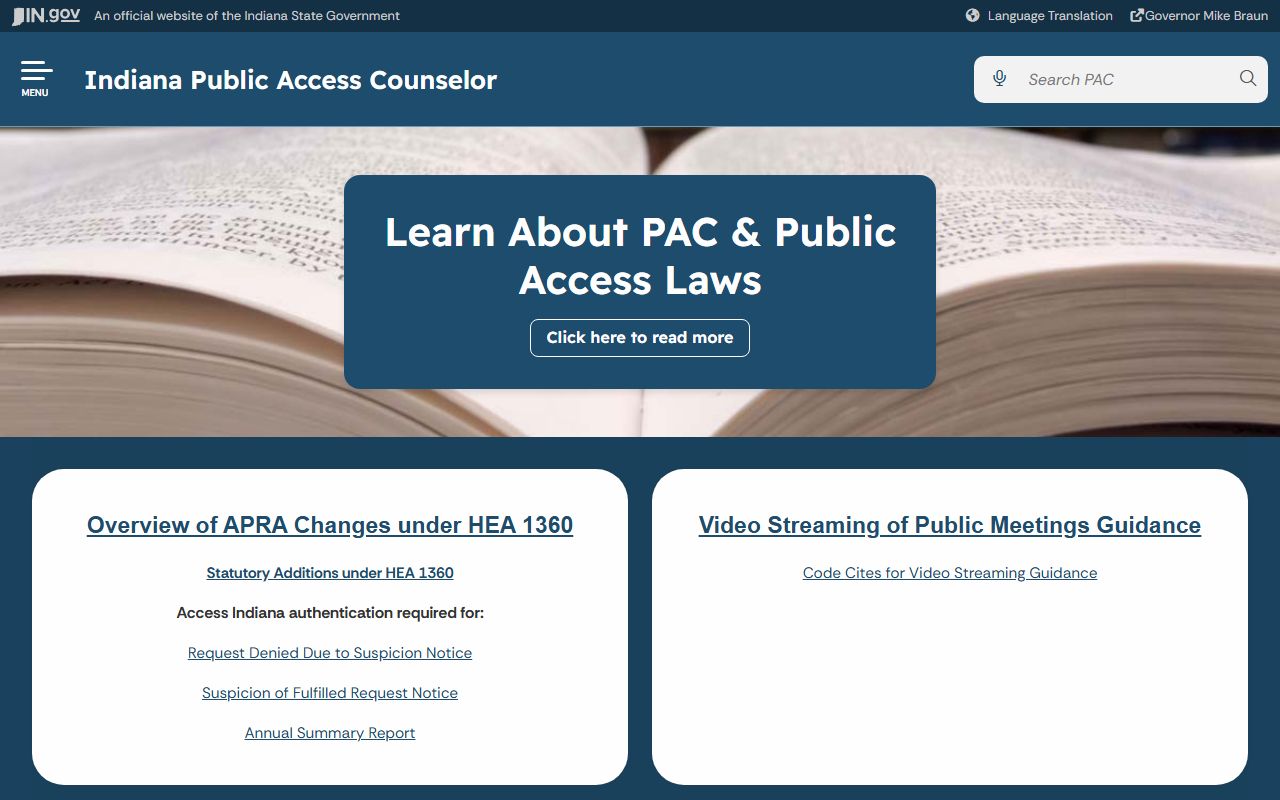
APRA does not override the Indiana Rules on Access to Court Records, so a restricted probate filing may still require waiver, a verified request, or a court order.
For family-linked files, a person may also need marriage or divorce records to establish a relationship before requesting estate material. The Clerk page is the main local copy channel, while related family records are covered in the Tippecanoe County marriage and divorce records material.